

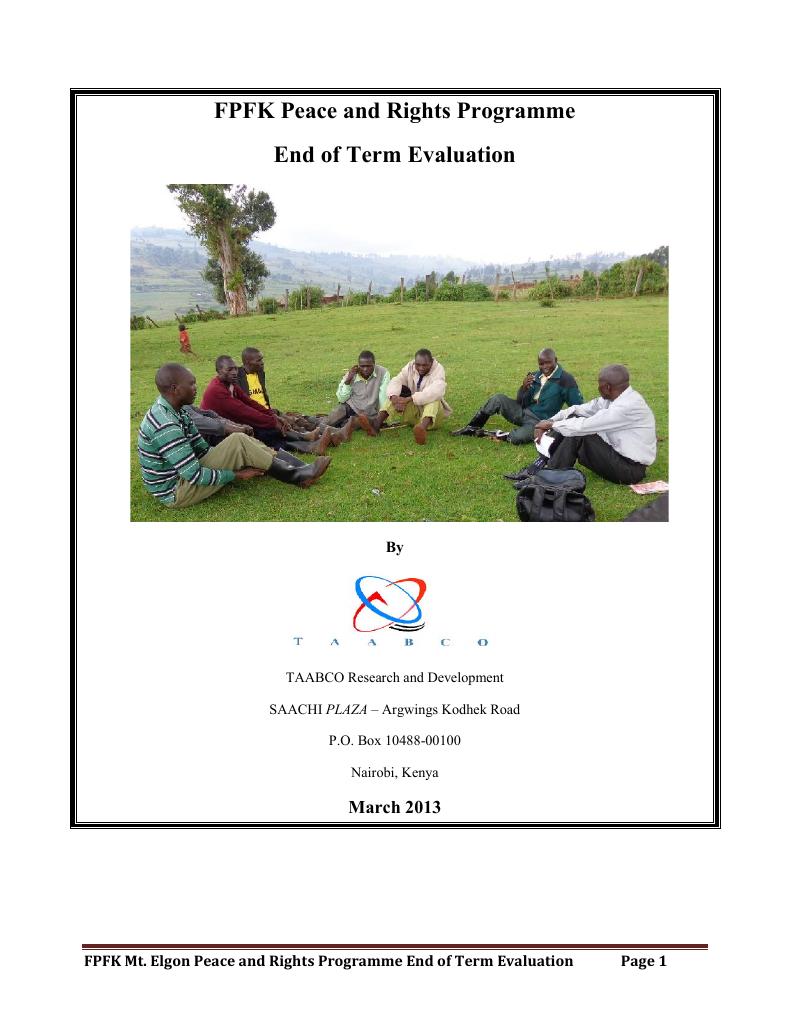
FPFK Peace and Rights Program End of Term Evaluation
Background The evaluation was undertaken between 4th December 2013 and 23rd December 2013. The consultants examined to establish relevancy, effectiveness in implementation, efficiency in resources use, recorded achievements, the challenges encountered and sustainability of the program and lessons learnt during the program period as per ToR. The objectives of the end of term evaluation includedTo determine the relevance and effectiveness of the program implementation in terms of realization of the intended results, the efficiency of resources use and recorded achievements. The evaluation further identified challenges encountered during implementation and assessed the sustainability of the peace and rights program. In the exercise the consultants recorded lessons learnt in the implementation of the program. Key Findings The key findings of the report are; RelevanceThe PYM AID Peace and Rights components of the project were purposed to mitigate through peace building, dialogue and reconciliation to bring harmony, tranquility and, understanding between community groupings to enhance equitable sharing of resources based on the community perception of the importance of peace and respect for human rights. Throughout this implementation period 2009-2013, the program has remained relevant and continues to be given that peace is a process that requires time for it to be embraced by all parties in the conflicts. The achievement can be measured to be 60% so far as revealed by the number of household that have resettled in their former homes. At least 300 families from Kopsiro, Kaptama and Cheptais have since returned to their homes. Validity of the program designThe Peace and Rights initiative of the FPFK program does complement government efforts in ensuring that communities in the region live together in harmony and observe the tenets of human rights as enshrined in the constitution (Bill of Rights). From observations during field visits, peace is slowly returning in the region of study and residents are observing human rights and willing to practice do no harm. This is evidenced in overwhelming attendance at gatherings and formation of working groups among the communities. Effectiveness of the implementation (Results) of the programThe program aimed to equip Community Faith Based Leaders with basic knowledge, skills and tools of undertaking Peace Building. Through the trained ToTs the evaluators established that the communities have internalized the values of peace and coexistence. The combatants have formed CBOs for development. The indigenous community Rights have been observed by facilitation of access to basic education by children of the Ogiek community and resettlement. This is evidenced in data and information obtained through KIIs and FGDs and interviews with government agencies in the target areas. So far 6 six public schools were constructed in the region to accommodate the children 16 classrooms were constructed in 5 schools in 2012 alone. In the same year 8,377 people were inducted into peace agreements mechanisms and the structures for conflict resolution. 417 clan elders were reached for dialogue and co-existence of the communities. In the period, 12 women groups were trained and provided with seed capital to commence income activities. Efficiency of Resources useIn this section, resources such as, finances, human resources time expertise, facilities and operational materials allocated to the program were analyzed to confirm or establish whether efficiently used to achieve desired outcomes. The finance resource use was efficient as shown by the physical audit of the project documents and the annual audit reports from external auditors of the organization. In terms of human resources the project has seven staff each holding a performance area that is critical to the program. From the observation the staff complemented one another effectively and efficiently. The operations remained cost effective. AchievementsHigh levels of awareness on the importance of Peace and co-existence among the communities in the target region measured by the level of participation by communities in joint meetings and deliberations that focus on group development and exchange of ideas; adequate knowledge and skills of peace building among Faith Based Leaders in the region and the realization of interdependence among communities; Recognition of women, children and indigenous Sabaot community rights by leaders including government administrators and observance of the same in transactions. Key Recommendations The consultants recommend as follows: Embrace A.V.P (Alternative to Violent Practices); Enhance the implementations of the Mabanga Peace Accord; Address the rights of children and women in the community; Build capacities of clan elders to check anti-social behavior; Ensure total rehabilitation and reintegration of the ex-militia; Address generational gap between the youth and elders in the community. This being an end of term evaluation, it is expected that the actors in the program will enhance the gains made through continued advocacy and dialogue among the target communities Comments from the organisation, if any The report lacked an analysis of the interventions, results and specific gaps and fails to link the practice to theoretical bases in Peace building and conflict management.